Pages

6.10.11

Farm Bags Year Two

drying

Last week I announced the end of year two's farm bags.  This year was quite a ride.  The weather was unusual, to say the least.  We were very cool until July, then began searing much warmer than normal temperatures and zero rain, it was capped off by a return to very cool temperatures just as the tomatoes should be ripening (we had our first light frost September 4!).  Despite the uncooperative weather we had a very successful season.  This is especially illustrated to me by the number of home gardeners who I talk to, that had little to no success with anything this year. 

We had changed our planting volume this year to specifically accommodate the number of families that we had taken on.  Even with this pre-planning, each week when I would announce a new farm bag was ready (half of the group would pick up on say a Wednesday and the other half on a Friday), I would begin to have some anxiety.  Would I have enough so everyone could have the same volumes?  Is everyone perceiving value from their bags?  By the time delivery would take place, each bag seemed to have grown exponentially from what I had envisioned on it's announcement.  We had eight successful farm bags when I closed last week.  We do have all of our fall planting, which has been loving the cool weather, so I informed the families that later in the fall we may have one or two more bags available for those interested in greens and sweet potatoes. 

What lessons from year two?  I need to focus on our own consumption and preservation.  We did fairly well, but my main concern was meeting the commitment I made to the produce families.  So when the season was less than ideal, I wanted to make sure they were accommodated.  I don't think I would change the planting strategy.  We had plenty of plants for the families.  The season dictated the yields and I feel fortunate we got the volume we did!  We had green beans coming out of our ears, which I feel quite proud of, since so many said they had none.  We have a lot of work ahead.  We won't begin fall prep/tear down until later this year because we are still nursing things along.  We began a gorgeous Indian Summer yesterday and it's set to last for another six days.  We hope to ripen enough tomatoes to get some canning done.  Whatever doesn't ripen, we are going to process all of the green tomatoes. 

Will we continue on?  Absolutely.  As with anything, we need to find the balance to handle it all.  But it is the direction we are going and sometimes you need to juggle while creating a new life path and maintaining the old.  I was so inspired by The Chef's Garden from Julie's post yesterday.  I wonder if we will get there someday?

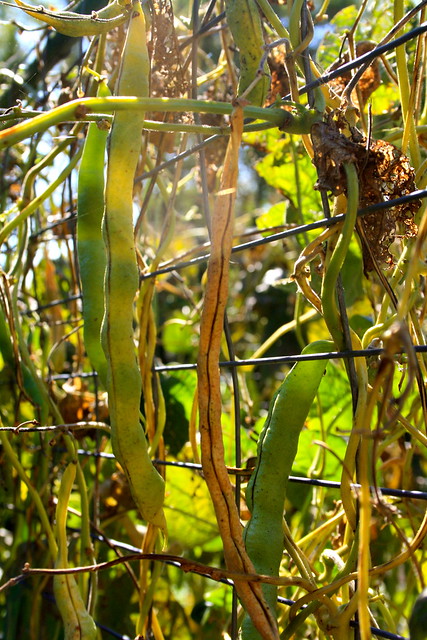
The above shot is our lazy housewife green beans drying.  These beans make amazing dried soup beans and I can't wait to shell them at the end of the season.  They will be a warm creamy winter treat!

5.10.11

already dreaming of next year's garden

200 new strawberries
our gardening year is winding down. we've just had 4-5 days of sunshine and warm temperatures (in the 70s), which breathed a bit of life into the tomatoes and eggplants in the greenhouse, so they're not as done as i thought they were, but they soon will be. we're also hoping that the sunshine will prove to have ripened the sweetcorn so we can actually eat a few ears of that before the season is completely over. but largely, the garden is in its last stages.

waiting for the corn
big successes were strawberries, raspberries, artichokes, kale (until some kind of caterpillars took it), swiss chard (which strangely was right next to the kale and the worms ignored it), borlotti beans, broad beans and runner beans. my herb bed, which is over closer to the house, did very well - apparently cool, rainy weather is perfect parsley and sage weather, as my parsley and sage have been phenomenal.

less successful were the patchy carrots (tho' i'm feeding fresh carrots to the bunnies every morning these days). not a single beet came up, nor a single leaf of spinach (i planted that twice!) only a single kohlrabi grew, our brassica bed resulted in 3 small heads of white cabbage and tho' the red cabbages are leafy and lush, they're not actually forming proper heads. the broccoli was only enough for a few spindles in the odd stir-fry and the cauliflower, which started off beautiful went strange and black - possibly because of the wet, cool weather. my onions are small and the tops died off quite early, tho' some of them are growing new tops no (which i can't explain). the onions themselves are ok when you pull one to use in a salad or to cook with, but they should have been much better. some of this, i don't know what to learn from it other than to say that we'll just try again next year.

kind of a lot of grass grew up in the paths!
in the greenhouse, we had enough tomatoes for salads, but not enough to can any. the aubergine had loads of blooms, but i think the cool temperatures prevented them from really growing into something, tho' we've had enough to be hooked on home grown aubergine as opposed to store-bought.  plus, some of the kinds i bought were actually petite varieties, so the size didn't matter that much.  the cucumbers produced well, after we saved them from the aphids, but with a cucumber-addicted child in the house, there weren't enough for pickles.  it's partially because we had a cool, wet summer and partially because we didn't have the greenhouse up 'til the end of may, so we missed quite a lot of the growing season. next year, it will be better.

black plastic on the left is where next year's garden will be.
we have super sandy soil and while it has great drainage, it seems like the nutrients quickly wash away as well. we conducted a few experiments, putting horse poo only on one squash and not another and learned that horse poo is KEY. we've prepared a large area for next year's garden - loads and loads of horse poo went into freshly-turned soil and then were covered in black plastic to prevent weeds.  luckily, our neighbors have eleven horses and love to be rid of their manure pile.  husband has built an elaborate composting area, so we'll have compost to add to the soil next year as well.

the new compost staging area
but i find i'm already thinking about what to plant next year. i want to try some new things and do better at some of the old ones. we planted 200 new strawberry plants, so i'm going to be busy making marmalade next june. i want more herbs and i want to try some unusual things, like mustard and horseradish. i'm also feeling pretty inspired looking around the chef's garden website. and despite our dark winter, i would like to try to extend the season a bit by planting lettuces and things inside the greenhouse. hmm, maybe i'd better go pull some weeds in there...

25.9.11

Sweaters anyone?

It's been some time that I contributed to our blog but just a few minutes I saw an amazing project which involves our old sweaters.


Hope you will have fun with your old sweaters in the future.
Elizabeth

second harvest honey


our second harvest honey is in the jars. we only got 15 kilos the second time around, which is less than the first harvest. that's not how it's supposed to work - usually, you get twice as much honey in the second harvest as in your first. we got 22 kilos the first time, so we were hoping for 40+. however, having one lazy queen (who we have now replaced) and it being a very rainy, cool summer, 15 kilos it was. apparently with the bad weather, the bees spent all of their time indoors, eating the fruits of their labors.


the second harvest honey is quite different. i suppose it has to do with different flowers being in bloom, tho' honestly, i'm still learning this and i don't really know why it's so different. the honey is much darker, thicker and richer and just tastes deeper and more complex somehow. we made a jar with pecans and one with walnuts, to have with some nice cheese this winter sometime.

we've learned so much this year and it's very satisfying to use our own honey in our morning tea and to take a jar as a hostess gift when we go for a visit. we've decided to have five bee families next year, now that we've learned the ropes, so we should have even more honey next year. maybe even enough to be able to sell some.

19.9.11

Petri dish meat, vegetarianism and conscious consumption

There was an interesting article in the New Scientist recently about petri dish meat, vegetarianism and conscious consumption. Yes, petri dish meat. Or invitro meat, or lab meat, or synthetic meat, or cultured meat - all terms for meat grown in a lab. The idea is that through tissue engineering, scientists can produce meat at a grand scale that would meet the meat demands of the world in a more environmentally and humane way. Starting with muscle stem cells, scientists are able to grow muscle cells and then muscle tissue of various animals. One lab even exercises the tissue by stretching it so that it is more like muscle from a living animal. In addition, they can grow meat from a variety of different animals, not just cows and pigs, since all they need are muscle stem cells to begin with and these can be taken without killing the animal. 
It is more environmentally friendly and when compared to 'conventional meat', as it uses less energy, lower CO2 emissions, lower water use and perhaps obviously much lower land. Indeed, it is estimated that cultured beef uses 99% less land than beef farming. It also has the potential to be more humane. So much so that PETA (People for the Ethical Treatment of Animals) is running a contest offering $1 million dollars to "the first scientist to produce and bring to market in vitro meat." Their logic is simply that synthetic meat would relive those animals currently kept and slaughtered for food. 
So, what do you think? I will admit I am totally, well, grossed out by the idea of lab meat. The image of these tissue strips getting exercised by stretching just to mimic muscle tissue has been with me for days. I am not a vegetarian but my husband is and I am essentially a vegetarian cook. But every once and a while, I like to eat meat. Like last night, my son and I had spaghetti and meatballs, which I made from Danish organic ground beef, of course. I can manage ground beef because there aren't bones, nerves, skin and all those things that remind me that it comes from an animal. So if I am squeamish about the actual meat when it reminds me that it does come from an animal, then I should be happy about lab meat, right? Why can't I celebrate this new way of producing meat? I mean are hot dogs or chicken nuggets much different? They are made with industrially recovered meat and full of chemicals to preserve, colour, and  flavour. (Although, I don't actually eat these either). 
As a practitioner of conscious consumption, this in-vitro meat has me re-examining and thinking deeply about what I eat. I'd like to know your thoughts. 

13.9.11

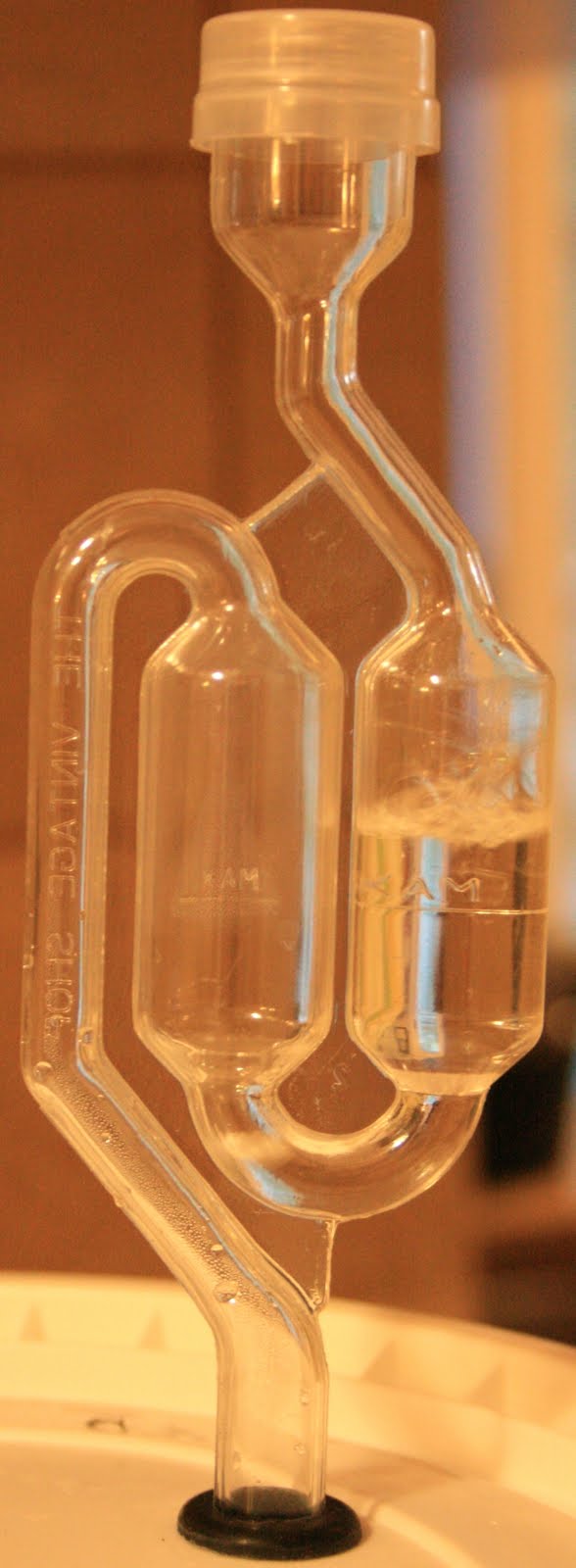
Adventures in Wine Making


 About ten days ago we began a crash course in wine making.  When we planted our berry patch last year, we included elderberries with the intent of doing elderberry wine.  Suddenly, we realized that the elderberries were ready and if we didn’t act fast, the birds would wreak havoc.  We ran down to our local old time feed shop/brew supply and got a quick crash course on starting the fermentation process. 
 We plowed through the information, bought the different components that we needed and began our primary fermentation.  Last night, we went to strain the fruit, and transfer the already wine like liquid to its secondary fermenting container.  Since we began with only a small amount, approximately 1 gallon, we decided to pour through a funnel, rather than siphon the wine-in-process, once we had strained out the poached fruits.  Everything was going swimmingly, until the darned bowl just would not cooperate, and about half of our first batch ended up down the drain.  So now instead of 5 bottles worth of fermenting juice, we have only two and a half.  Ah well, yet another lesson learned…siphon even small amounts to avoid catastrophe frustration. 
 Never fear, we have been collecting loads of the still ripening fruit and will be putting down our second and much larger batch this weekend.  On the bright side, B tasted the batch and was pleasantly surprised by the flavor and complexity already developing! 

What have we learned so far??  When dealing with fruits like rhubarb and berries freeze them first, then as they thaw they are already squishier and the juice flows out more freely.  Be sure to kill off the natural pectin’s that are there (they may or may not be of benefit in the finished product and you don’t want to risk the outcome of all your hard work in the end) and then add back a wine grade pectin.  Make sure everything is spotlessly clean using a special detergent.  There are many kinds of yeast, each one works best at a different temperature and will help to provide different alcohol contents, so educate yourself.   Finally, do not let small setbacks frustrate you; it is all a grand, and hopefully tasty, chemistry experiment.  What is next on taps?  More wine adventures, and mead...oh I wish I had some of Julie's honey!

5.9.11

pressing cider


this weekend, we sent the child up the old apple tree in our back yard to get those hard-to-reach apples. it's a very old tree and so the apples weren't as plentiful as we would have liked, but there were enough for a first run of our cider press.


eventually husband went up the tree too and they managed to shake down all of the apples. in all, there were 50-60 some. they are a bit on the small side, but delicious, crisp and juicy.


we'll prune back the tree significantly this autumn and hope it encourages better apple growth next year. it's quite a charming little old tree, so we're definitely not cutting it down all together, as it gives atmosphere to the back yard.


the next step was to send them through the chopper. we learned that the chopper has an awful lot of vibration, so it's a good thing husband sunk those legs of the bench 50cm or more into the ground.


we also realized that the little grinder's engine isn't going to be up to the task of many more apples than we processed. each apple we fed in slowed it down significantly and we had to pause in between to let it get up to speed. it also threw apple chunks around quite a bit (hence the towel over the top of it).


this is a shot of the clean plastic ikea container where most of the chopped apples end up, below the chopper. that worked pretty well.


the 50-odd apples resulted in this much chopped. we didn't weigh it, but i suppose it was about 5 kilos.


we readied the press. the oak grate in the bottom took quite some rinsing before it stopped giving off an oak-color to the water. we wanted our cider to get its color from the apples, not from the oak! after many rinses, also with boiling water from the kettle, the water ran pretty clear from the oak.


the next step was to make the "cheese." we put in the frame and then laid in a polyester netting cloth (we're going to experiment with different kinds of cloth, but tried this to start with, as it's what many of the sources we've read recommend). the cloth was 150cm wide by about 150cm in length.


next, we filled it with our chopped apples. the entire bucket of chopped apples fit in one cheese, tho' the press can take more than one at at time.


next step is to fold the cloth over the chopped apples. we folded each side over and then the ends, to carefully enclose all of the apples.


it's a great activity for kids. sabin was so happy to help with it. she actually did a lot of the work.


once it was folded carefully, husband lifted out the frame (you can see the little nail "handle" there underneath his right hand. the cheese stood well on its own.


next, we placed an oak grate on top of the cheese and then, since we only had one, three large pieces of 4x4 and then the jack. husband has made a little frame for the jack to stand in, so it doesn't shift out of place during use.


then we began pressing (or rather, we used child labor to do the the pressing), the cider running out into a large bowl underneath the sink's drain. we pressed until sabin couldn't pull the jack handle down again, even by hanging her whole weight on it.


our 5 kilos of apples resulted in approximately one whole liter of cider (these are 750ml bottles). it's sweet and delicious and we're hoarding it a bit until we get our hands on some of the apples promised by a few neighbors.


we fed the apple remains to the chickens, but with the next batch, i'm going to make cider vinegar. apparently it's pretty easy - you just take these apple remains, put them in a big crock with some water and let them ferment for a month or so, until the vinegar is the strength you want. sounds pretty easy to me.  i just washed up the cloth and it's ready for the next go.

we learned several things:

~ it takes a LOT of apples to make not very much cider.
~ the engine of our chopper isn't powerful enough.
~ the oak is a bit difficult, since it wants to contribute its color to the batch (how do they keep chardonnay golden in oak barrels?)
~ i thought husband's cider press was a bit over-dimensioned, but it needs that strength to withstand the pressure from the jack and stay together. it did this with flying colors.
~ the repurposed sink makes a great receptacle for the juice.

we've managed to pick up 4 beautiful old-fashioned glass wine balloons here and there over the past week or so and we're ready to fill them and make hard cider, as soon as we get some more apples.

if you have any questions about any of this, just ask in the comments!

~ julochka